CNC Turning Center Operations
Unlike milling, turning operates on the principle of spinning a cylindrical workpiece against a stationary cutting tool. The primary machine for this is the CNC Lathe or Turning Center. This process is inherently suited for producing axially symmetric parts such as shafts, disks, and threaded fasteners.
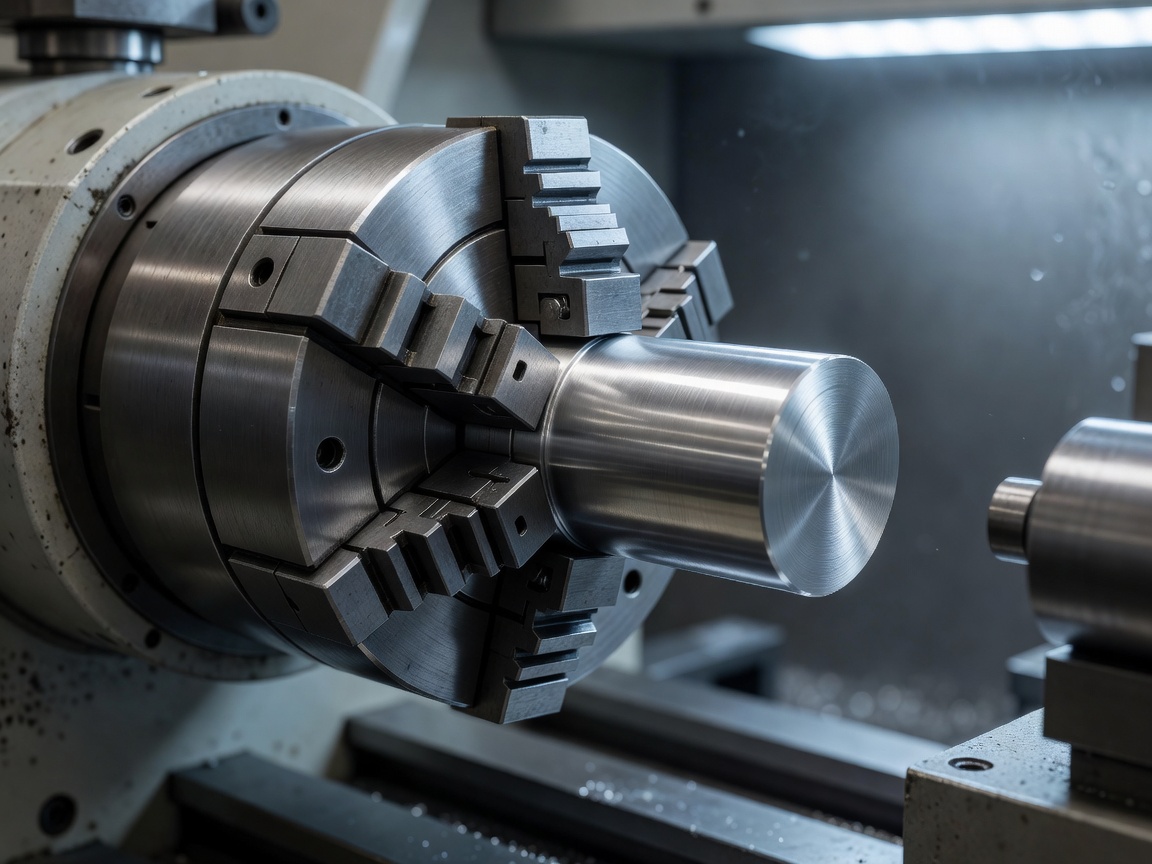
Basic Turning Mechanics
The primary axes on a standard lathe are X (controlling the diameter of the cut) and Z (controlling the longitudinal movement along the part). Common operations include facing (cutting across the end), outer diameter (OD) turning, grooving, threading, and boring.
Mill-Turn and Live Tooling
Modern manufacturing demands fewer setups. Mill-turn centers are lathes equipped with "live tooling." In these machines, the tool turret not only holds static turning inserts but also features driven spindles for end mills and drills.
Combined with a C-axis (which allows precise positioning and controlled rotation of the main spindle), a mill-turn machine can perform off-center drilling, cross-tapping, and complex milling on a turned part without ever moving it to a VMC.
Swiss-Type Machining
For high-volume, extremely precise, small-diameter parts (often used in medical devices and watchmaking), Swiss-type lathes are employed. Unlike standard lathes where the part is held in a chuck and the tool moves along the Z-axis, a Swiss lathe feeds the bar stock through a guide bushing. The cutting tool is positioned right next to the bushing, meaning the material is supported perfectly at the point of the cut, eliminating deflection on long, slender parts.